
Edoardo Ruffin
Medicine
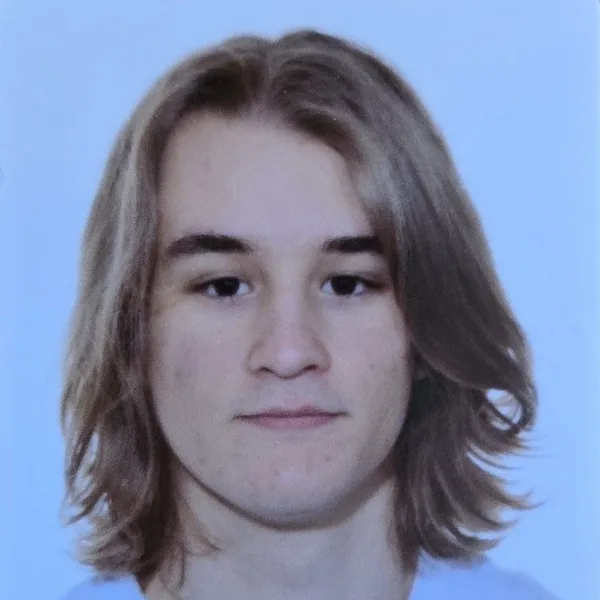
My name is Edoardo Ruffin and I am a second-year Medicine student at the University of Padua. My decision to take up this course of study goes back to when I was in my second year of middle school. I remember that we had been given the task of doing a research project on a topic of our choice, and I chose to look into how a revolutionary robotic prosthesis worked, one capable of interacting with the nervous system in a way similar to a natural limb. It was on that very occasion that I realized how much the complexity of the human being fascinated me and how much I wanted to understand it more deeply. During high school, my wish to study Medicine grew even stronger thanks to studying biology, chemistry, biochemistry and the first concepts of anatomy. I thus began to delve, albeit still superficially, into the extraordinary complexity of our bodies and to understand how different systems constantly work together to allow us to perform actions we often take for granted, such as breathing or metabolizing nutrients. Thanks to studying the humanities, I came to understand even better another fundamental aspect of my choice: besides scientific curiosity, there was the desire to be able to use the knowledge I had acquired to help someone in a concrete way in their time of need. It was a thought that made me feel good and that, even today, is one of my greatest motivations. I remember very clearly the day of the oral part of my school-leaving exam, when, as an opening prompt, I was shown a picture of an electricity pylon, which I managed to link, for the science part, to how the neuron works. The exam quickly turned into a presentation on the transmission of the nerve impulse and on some neuroscience studies I had explored in depth a few months earlier while preparing for the Neuroscience Olympiad. As soon as I got home from the oral exam, I enrolled in the open semester for Medicine: I couldn't wait to start. Around the same time I found out that the Padova Sud Committee of the Italian Red Cross was running the basic course to become a volunteer and, without thinking twice, I decided to sign up. Once the course was over, I continued my training with the TSSA (patient transport and ambulance rescue), eager to acquire right away the knowledge and skills needed to help people, but also to start dealing with real situations and learn how to relate to others. I applied to GA-THERE because I have a dream: to contribute concretely to the progress of research and to the development of new treatments for neurodegenerative diseases. It is a field that is particularly close to my heart, partly because it is a reality I find myself facing at very close quarters. Once I joined the program, I was lucky enough to be paired with Luca, a brilliant student with a few more years of university and a lot more experience than me. From the very beginning he was able to guide me and answer the many doubts and concerns I had as a first-year student. Having the chance to talk things through with a student who had already faced many of the difficulties I had yet to encounter was extremely useful, not only for getting practical advice but also for discovering approaches and points of view different from my own.
I finished my first year with excellent results, partly thanks to the valuable advice I received from Luca. Our conversations, however, left me with something that goes beyond academic results. They helped me understand just how many and how varied the ways of contributing to people's well-being through medicine are. While at first I had a fairly precise idea of what I wanted to do in the future, thanks to this experience I learned to broaden my horizons, considering more openly specialty and research paths other than those I had imagined.
I believe this is one of the most important lessons I will take with me from the GA-THERE experience: having understood how valuable exchanges with more experienced people can be, not only for dealing with the difficulties of the present but also for discovering opportunities and perspectives that, on our own, we might never have considered.
Channel: An unconventional dream
My mentor: Luca Tognari